
The Future of Artificial Intelligence in 2025: Trends & Opportunities
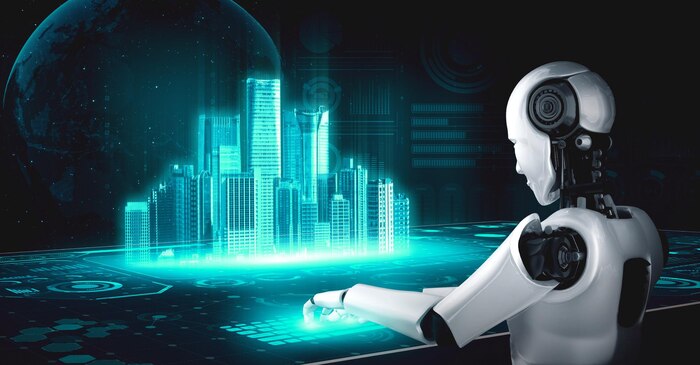
Artificial Intelligence (AI) is no longer a distant dream—it’s here, and it’s transforming our world faster than ever. From healthcare to finance, from education to entertainment, AI is shaping the way we live, work, and interact. As we move into 2025, the role of AI is expected to become even more prominent, bringing both opportunities and challenges.
This article explores the future of Artificial Intelligence in 2025, highlighting key trends, business opportunities, and its impact on industries.
1. AI in Everyday Life
In 2025, AI will be fully integrated into our daily routines. Smart assistants will not only answer questions but anticipate needs—ordering groceries before they run out, scheduling health checkups, and even managing personal finances.
Imagine waking up in a house where the AI already adjusted the temperature based on your sleeping patterns, prepared your coffee, and scheduled your day according to your mood and productivity levels.
This level of predictive personalization will define the AI experience in 2025.
2. AI in Healthcare

Healthcare is one of the biggest beneficiaries of AI. By 2025, AI-driven diagnostics will surpass traditional methods in speed and accuracy. AI will help in:
-
Early disease detection (like cancer, diabetes, and heart disease)
-
Personalized treatment plans using patient data and genetics
-
AI-powered robots assisting in complex surgeries
Telemedicine combined with AI chatbots will make healthcare accessible even in remote villages. This will bridge the healthcare gap globally.
3. AI in Business and Finance
Businesses in 2025 will depend on AI to make data-driven decisions. AI will automate repetitive tasks, analyze big data, and provide real-time insights.
Key transformations include:
-
Fraud detection in financial transactions
-
AI trading bots managing investments
-
Customer support chatbots handling queries 24/7
-
AI-powered supply chain optimization
Companies that embrace AI early will gain a massive competitive advantage.
4. AI in Education
By 2025, classrooms will look very different. AI tutors will provide personalized learning paths based on a student’s speed and ability. For example:
-
A slow learner will get extra support in weak areas.
-
A fast learner will be challenged with advanced lessons.
Virtual Reality (VR) + AI will make history, science, and mathematics interactive, giving students real-life simulations.
This will make education more inclusive and accessible globally.
5. AI and Smart Cities

Urban development will rely heavily on AI. In 2025, smart cities will use AI for:
-
Traffic management to reduce congestion
-
Energy efficiency by optimizing electricity usage
-
Waste management with AI-powered sensors
-
Public safety through AI surveillance systems
Smart cities will improve quality of life while reducing environmental impact.
6. Challenges of AI in 2025
While AI brings opportunities, it also comes with challenges:
-
Job displacement: Automation may replace millions of routine jobs.
-
Ethical concerns: Misuse of AI in surveillance, privacy breaches, and deepfakes.
-
Bias in AI: Algorithms trained on biased data may lead to unfair results.
-
Dependency risks: Over-reliance on AI may reduce human critical thinking.
Governments and organizations must create ethical frameworks to regulate AI responsibly.
7. The Future: AI + Human Collaboration
The biggest shift in 2025 will not be AI replacing humans, but AI collaborating with humans. Machines will handle repetitive tasks, while humans will focus on creativity, leadership, and emotional intelligence.
This collaboration will unlock innovation in medicine, business, and sustainability—making the future brighter.
Conclusion
Artificial Intelligence in 2025 will be more powerful, accessible, and integrated than ever before. From healthcare to business, from education to smart cities, AI will shape every aspect of our lives.
The future of AI is not about machines taking over, but about how we use AI to solve problems, enhance productivity, and improve human life. Businesses, students, and governments must adapt quickly—because the AI revolution is no longer coming, it’s already here.


